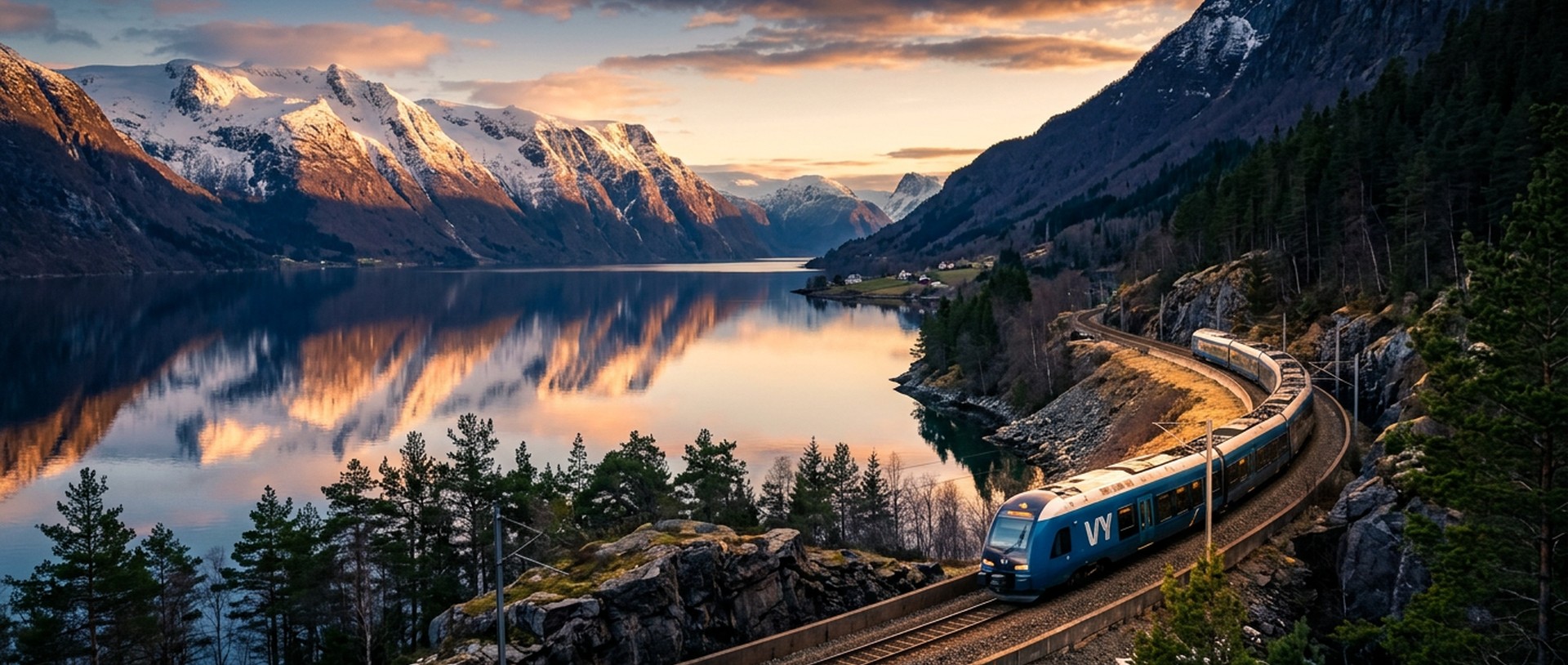
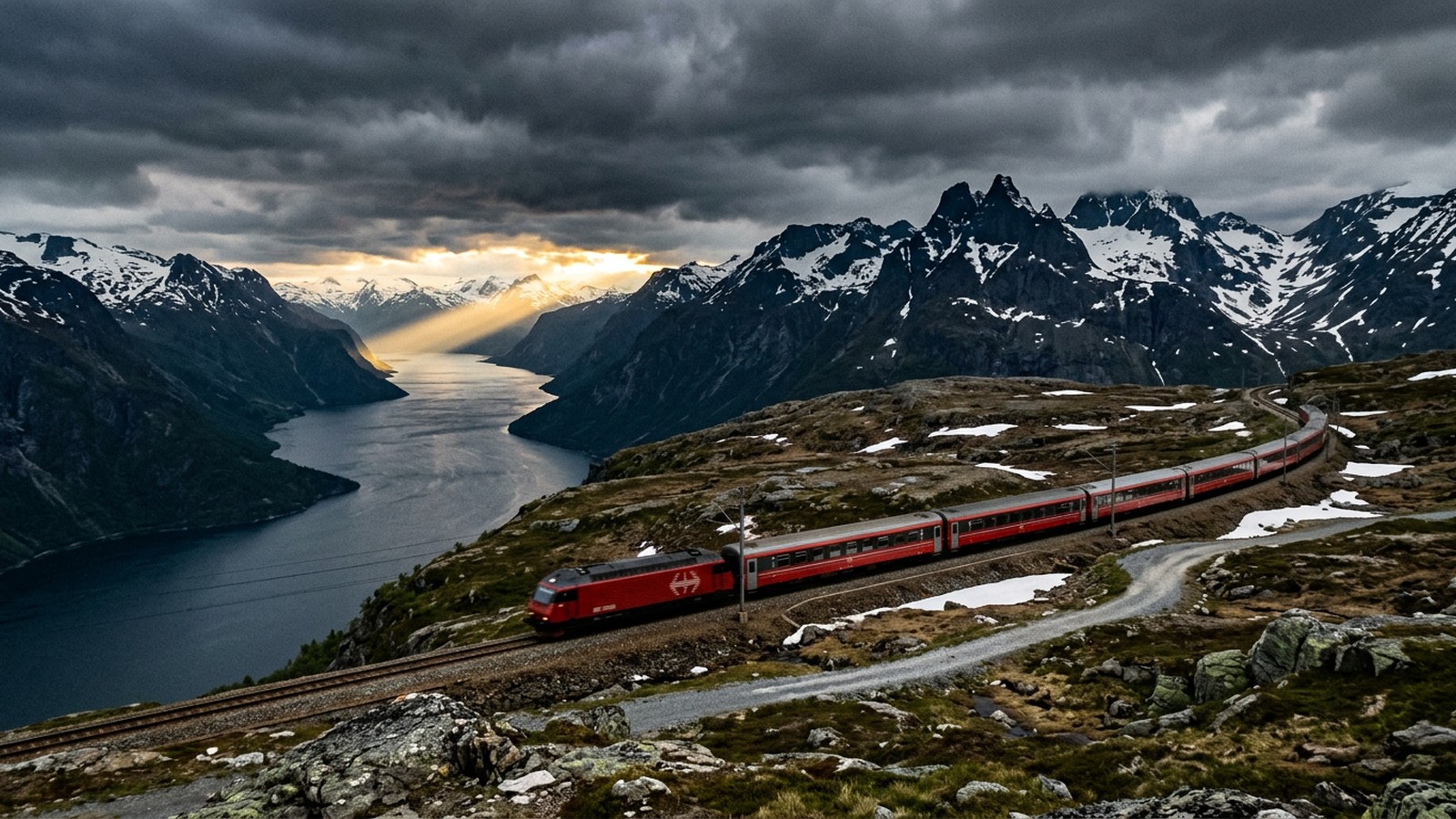
Long-distance Norwegian train crossing a high mountain plateau beside a fjord

Norway · Rail Travel

Cross the Arctic Circle by Rail

Two of Europe's most scenic rail journeys, side by side — compare routes, seat classes, fares and honest booking tips, all in one independent guide.

Independent & unbiased guide Secure booking checkout Real, traveller-tested routes
0 km
Longest single route
0 hrs
Longest journey
0
Iconic long-distance trains
0 km/h
Fastest scheduled service
0
Operators across the network

By The Numbers

Norway's rail network at a glance

Beyond the passenger routes, here's the scale and infrastructure behind the network. Norway's railway system consists of long-distance scenic lines and dense commuter networks around Oslo and Bergen. Most of the electrified network runs on power from Norway's hydroelectric grid, and rail travel produces a fraction of the emissions of the equivalent domestic flight.

4,200+ km of track

Norway has over 4,200 kilometers of rail track connecting its major cities and regions.

Standard gauge, 1,435 mm

Standard gauge rail connects Norway to the wider European network.

Bane NOR, established 2017

Bane NOR controls and maintains the national rail infrastructure.

62% electrified

Most of Norway's rail network runs on hydroelectric power.

Arctic Circle crossing

The Nordlandsbanen crosses the Arctic Circle at the Polarsirkelen monument.

Steepest standard-gauge line

The Flåmsbana climbs a gradient of 55‰, among the steepest standard-gauge railways in the world.

Know before you go

Planning a Norwegian rail trip?

May–Sep
Best season for fjords
Weeks ahead
Book advance fares this far ahead
Oslo↔Bergen
Busiest scenic route
4 operators
Covering every region

Operators

Who runs the Norwegian railway?

Norway's train operators — the Norwegian train operators running every long-distance route — break down into four carriers — from Vy's core intercity network to SJ Norge's Arctic crossings and Go-Ahead Nordic's southern routes, each one its own kind of journey and its own scenic experience.

Norwegian rail network
Hub city Regional stop

Hover a city to highlight it, tap for routes. Drag to pan; pinch, Ctrl/Cmd + scroll, or use +/− to zoom out to the whole country.

Popular Norwegian train routes at a glance
RouteOperatorDistanceDurationFrequency
OsloBergenVy~371 km~6.5 hrs4-5x dailyView ↗
OsloTrondheimSJ Norge~553 km~7 hrs2-3x dailyView ↗
OsloStavangerGo-Ahead Nordic~596 km~8 hrs2-3x dailyView ↗
MyrdalFlåmVy~20 km~1 hrSeveral dailyView ↗
TrondheimOsloSJ Norge~553 km~7 hrs2-3x dailyView ↗
StavangerOsloGo-Ahead Nordic~596 km~8 hrs2-3x dailyView ↗
VossBergenVy~100 km~1.2 hrsSeveral dailyView ↗
OsloMyrdalVy~280 km~5 hrsSeveral dailyView ↗
BergenFlåmVy~170 km~4.5 hrsDaily, connectingView ↗
Vy

Vy

Intercity & regional · nationwide

The main operator for Norway's core network — Oslo to Bergen and Lillehammer on the Bergensbanen and Dovrebanen, in Standard, Komfort and Nattog sleeper classes. It operates most of the day-to-day intercity network, formerly branded NSB before its 2019 rename.

View fares ↗
SJ Norge

SJ Norge

Northern network · Arctic routes

Runs Norway's northern network since winning the 2019 tender: the Nordlandsbanen across the Arctic Circle, the Raumabanen through Romsdalen, and the Trønderbanen around Trondheim.

View fares ↗
Go-Ahead Nordic

Go-Ahead Nordic

Southern network · regional

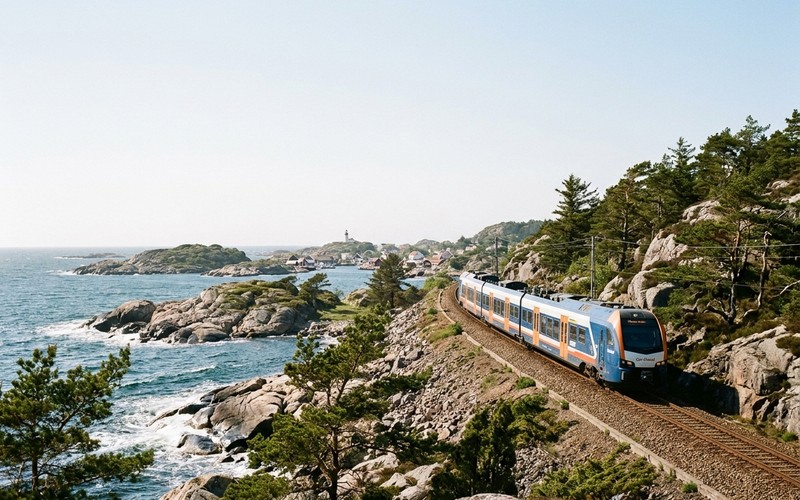
Operates the Sørlandsbanen and regional routes across southern Norway since 2019, connecting Oslo to Kristiansand and Stavanger.

View fares ↗
Flytoget

Flytoget: Oslo Airport Express Train

Airport express · Oslo

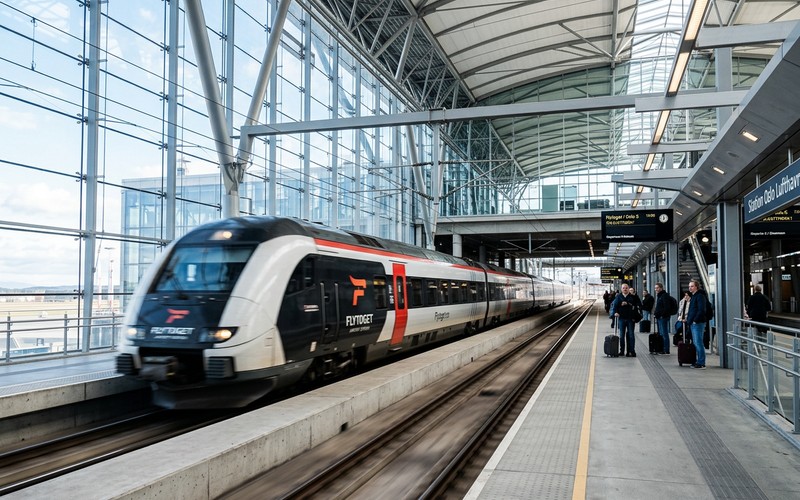
Runs the high-frequency airport express between Oslo Airport and Oslo S, Norway's fastest scheduled train at up to 210 km/h.

View fares ↗

Seat Classes

What are the classes on Norwegian trains?

The class you choose shapes the whole journey — a short regional trip feels very different from a multi-day rail experience. Depending on the operator, travel classes include Standard and Komfort seating through to Nattog sleeper cabins.

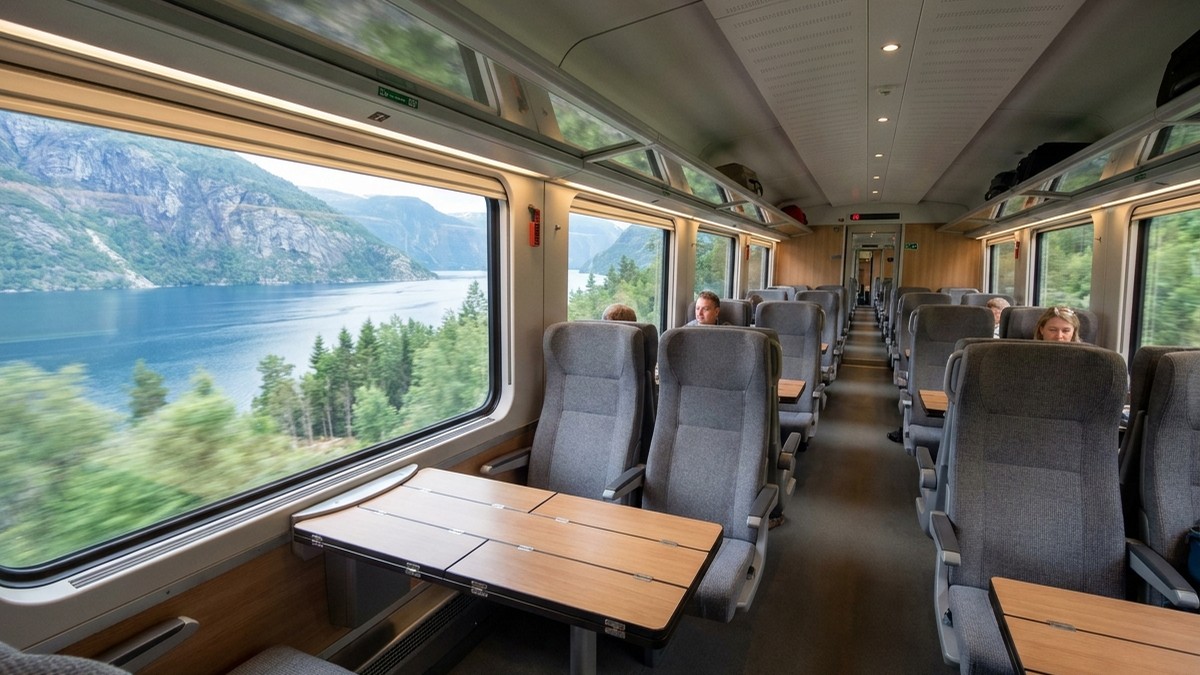
Vy Standard class seating
Vy

Standard Class

Reserved 2-2 seating — comfortable, air-conditioned and good value across the network. From ~NOK 300.

  • Reserved 2-2 seating
  • Power outlet at every seat
  • Café car access
  • Overhead & end-of-carriage luggage
Check fares ↗
Vy Komfort class seating
Vy

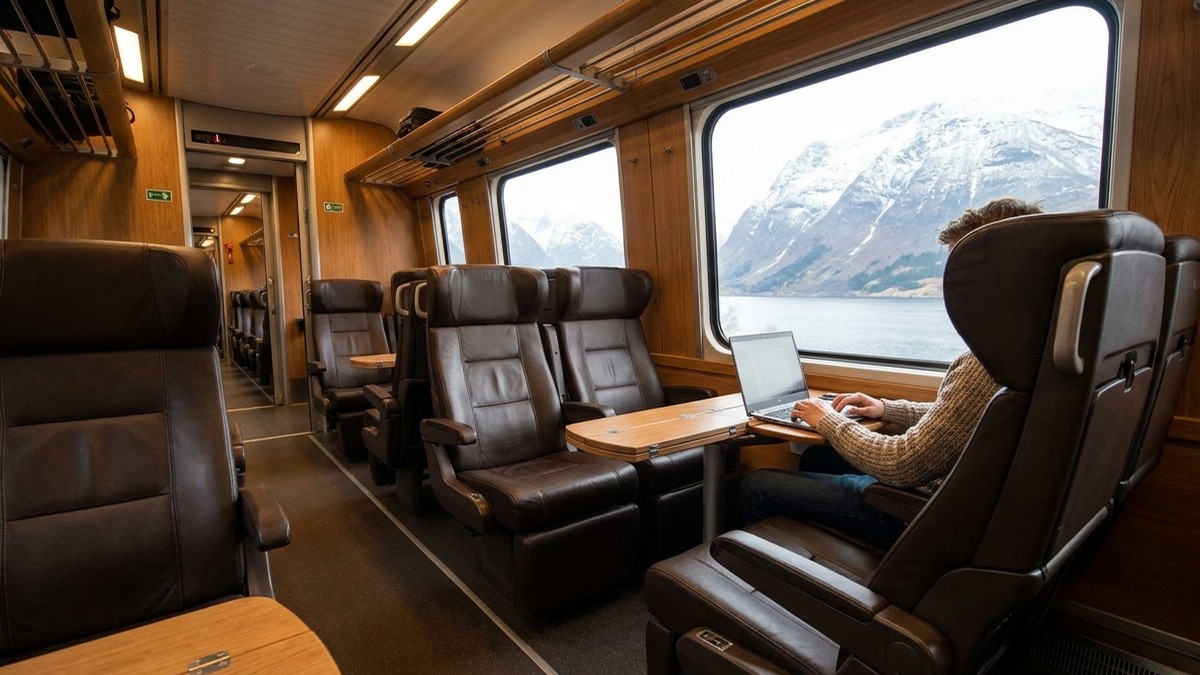
Komfort Class

Wider seats with extra legroom and a quieter carriage. The comfort upgrade for daytime scenic runs.

  • Wider seats, extra legroom
  • Quieter designated carriage
  • Complimentary tea & coffee
  • Priority boarding
Check fares ↗
Vy Nattog sleeper cabin
Vy · overnight

Nattog Sleeper — Night Trains

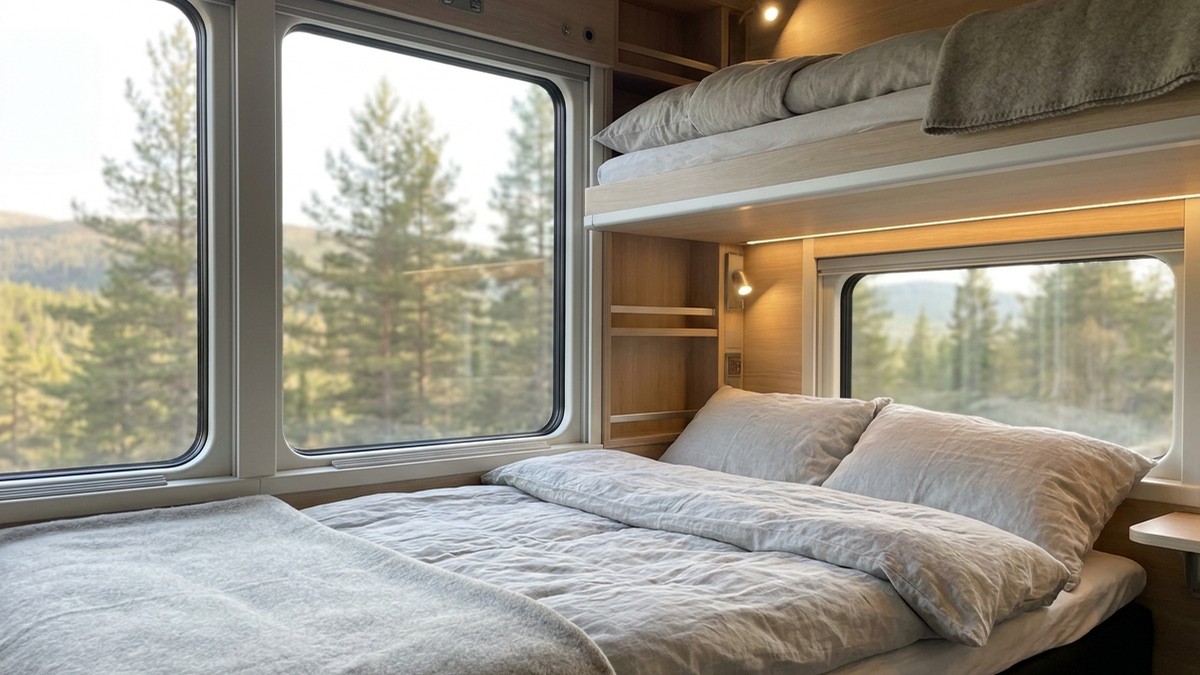
Private sleeper cabins on the overnight Oslo–Bodø and Oslo–Trondheim services. Book early on popular dates.

  • Private cabin, converts to bunks
  • Shared or private bathroom
  • Reading light & storage
  • Overnight services only
Check fares ↗

Train Stations

Where do you catch the train?

Every long-distance journey starts and ends at one of these terminals — from Oslo's central hub to the fjord-side terminals further north.

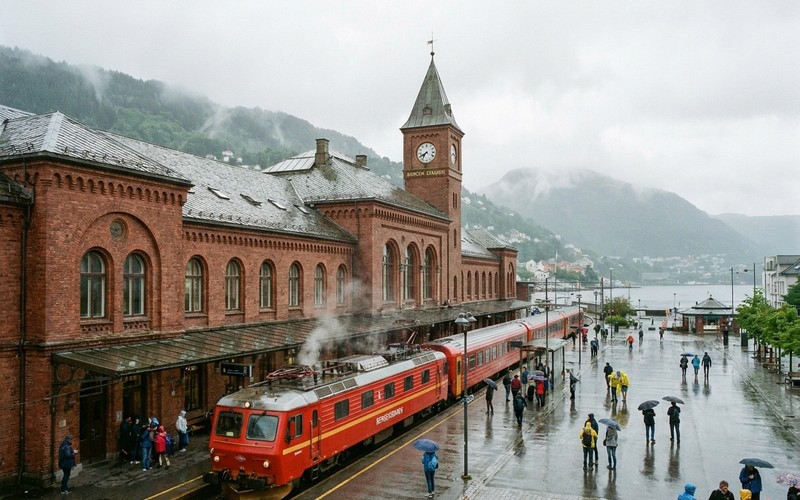
Bergen Station
Bergen

Bergen Station

Historic terminal at the western end of the Bergensbanen

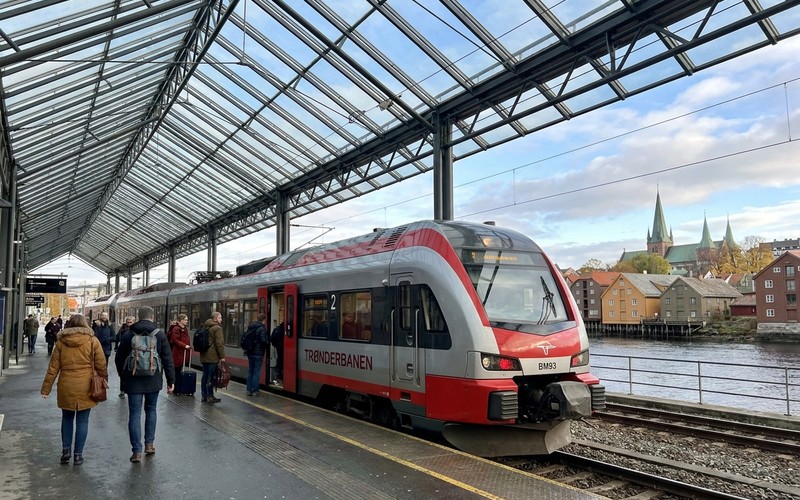
Trondheim S
Trondheim

Trondheim S

Gateway to the Nordlandsbanen and the Trønderbanen

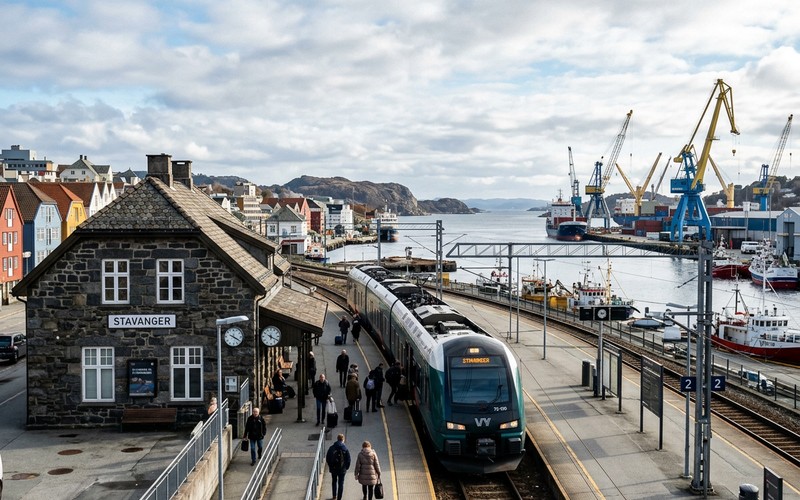
Stavanger Station
Stavanger

Stavanger Station

Southern terminus of the Sørlandsbanen

The Network

What are Norway's long-distance trains?

A quick primer on how the Norwegian railway network — and the wider Norwegian railway system it sits inside — actually fits together: the operators, the long-distance and regional train services, and the lines connecting Norway's major stations from the capital to the Arctic Circle.

Norway's trains aren't built for outright speed — they're built for scenery. The Bergensbanen (Bergen Line) crosses the Hardangervidda plateau between Oslo and Bergen in around 6.5–7 hours, the Nordlandsbanen runs north through Trøndelag and across the Arctic Circle to Bodø, and the Flåmsbana descends nearly 900 metres from Myrdal to the fjord below. Lonely Planet and other major travel guides regularly rank the Bergensbanen among the world's great train journeys, and each one is really its own journey rather than a simple point-to-point trip.

Compared with a 1-hour Oslo–Bergen flight from roughly NOK 800, the Bergensbanen takes most of a day and often costs more — but it crosses Finse, the highest mainline station in Northern Europe at 1,222 metres, along the way. The view is the point, not a side effect of getting somewhere.

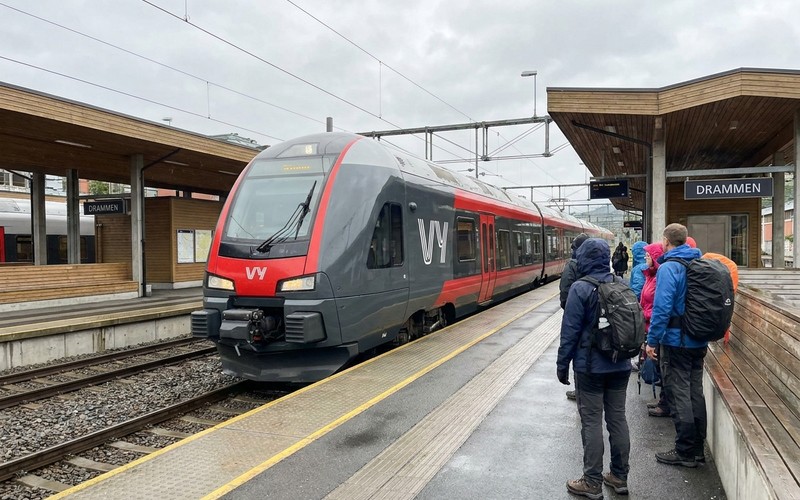
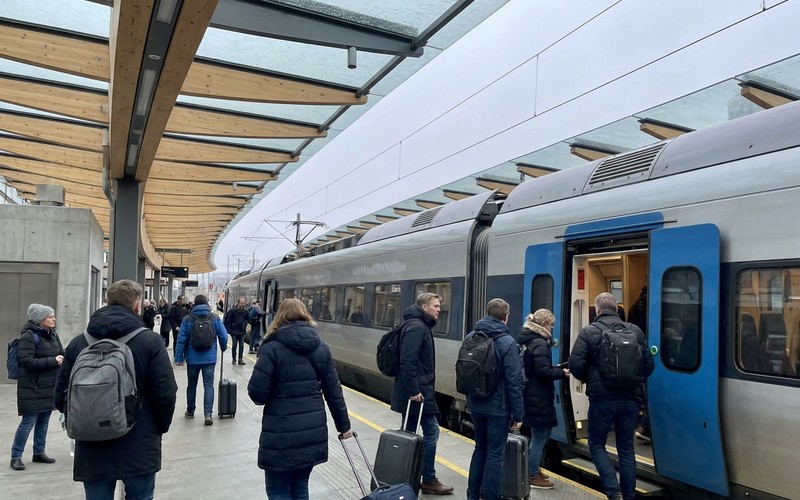
Vy intercity train at a covered station platform in Norway
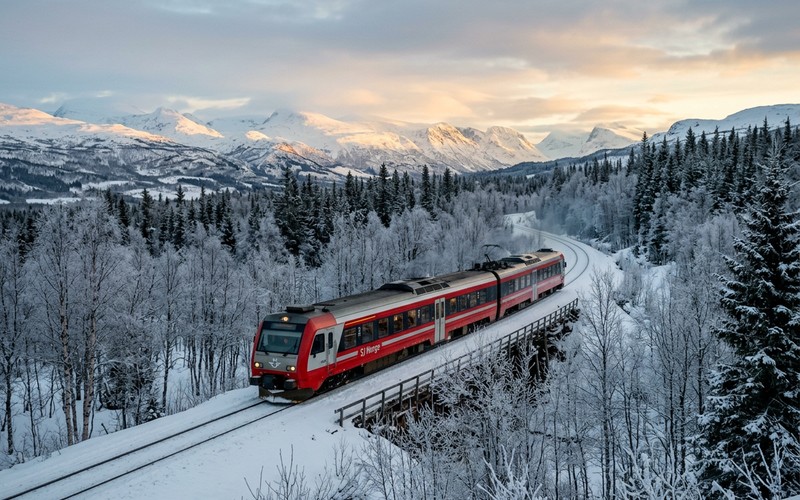
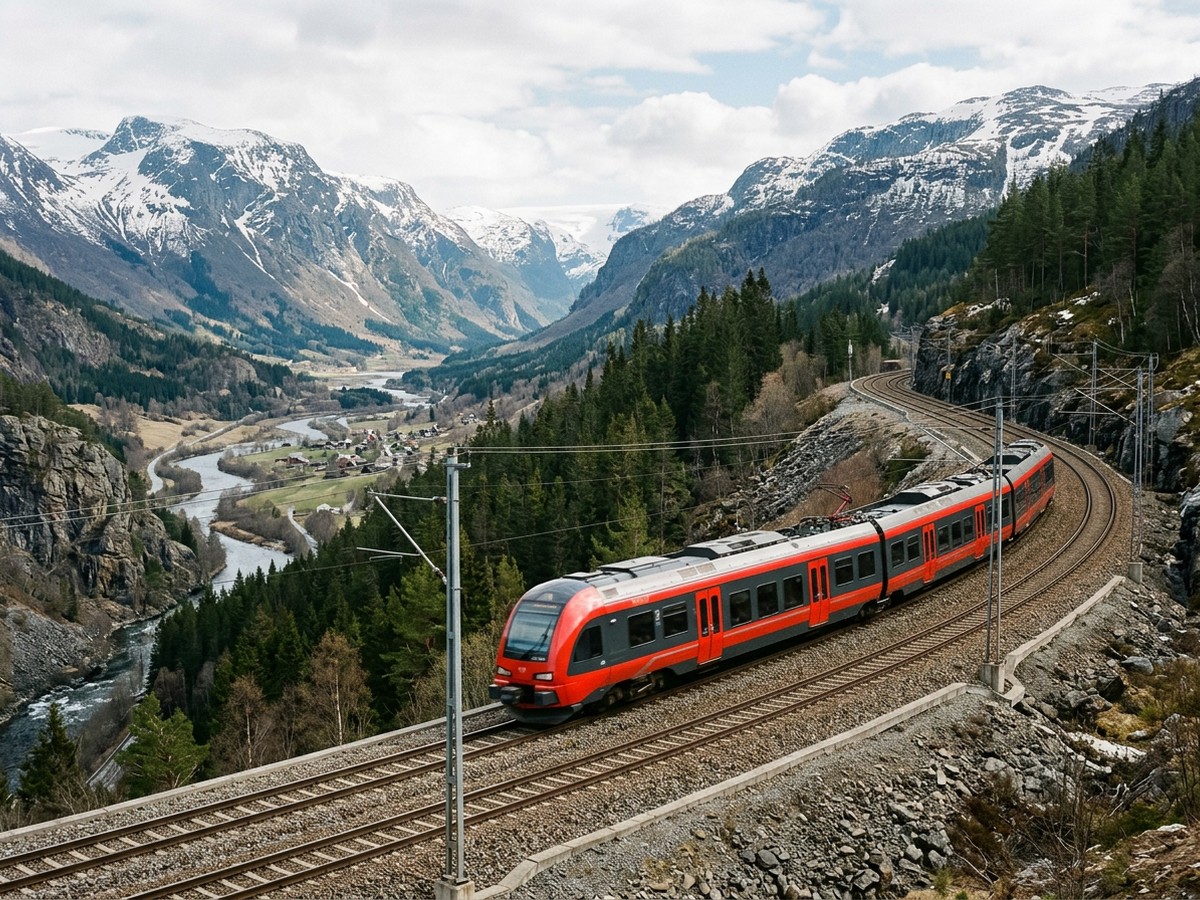
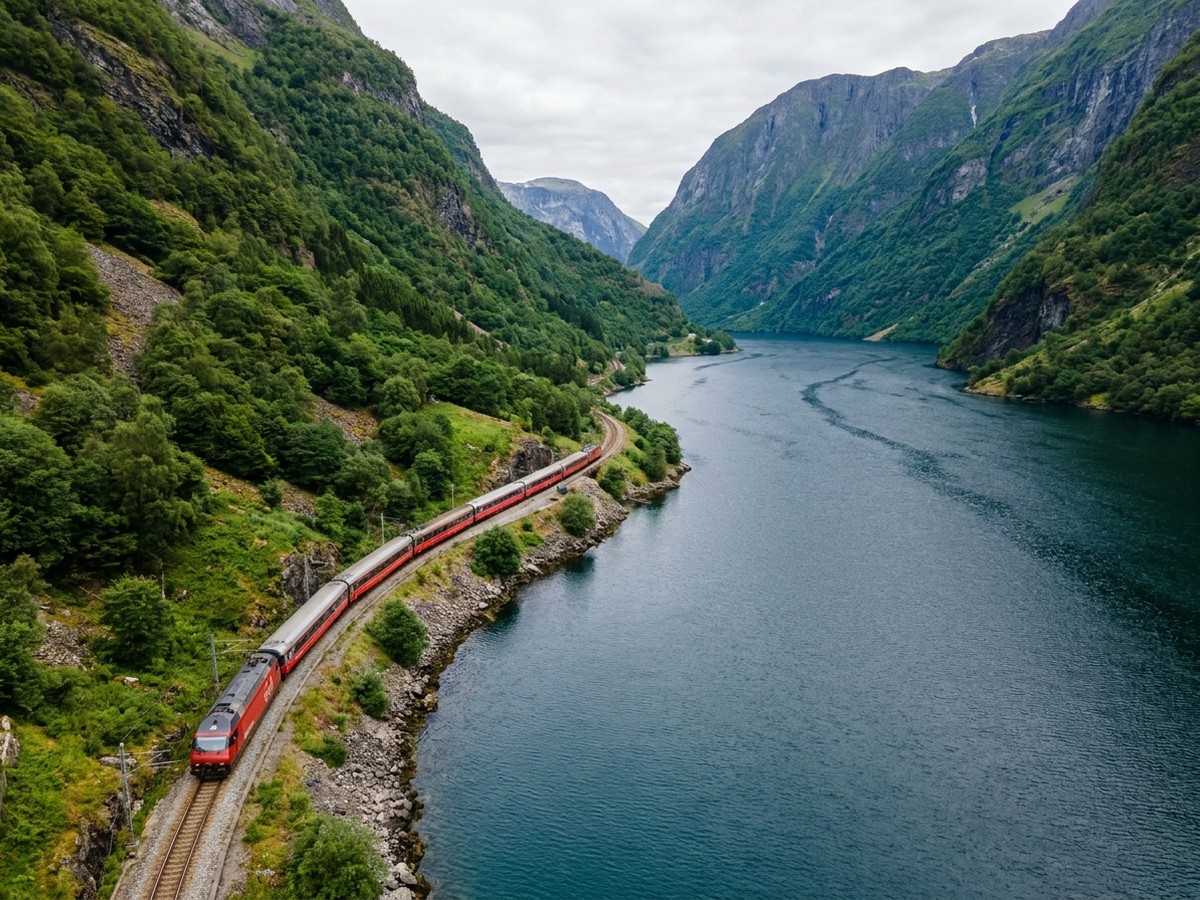
Long-distance Norwegian train curving along a railway line beside a fjord

Norway's rail network reaches far beyond Oslo, the capital city where nearly every long-distance line begins. Vy runs the core intercity network — including the Dovre Line (Dovrebanen), which connects Oslo and Trondheim via Lillehammer in about 7 hours, and the wooded Gjøvik Line, which runs from Oslo through the Nordmarka woodlands to Gjøvik. SJ Norge, a subsidiary of SJ (Swedish Railways) operating under the 2019 "SJ Nord" traffic package, runs the Nordland Line (Nordlandsbanen), the Rauma Line (Raumabanen, from Dombås to Åndalsnes) and the Trønderbanen; Go-Ahead Nordic runs the Sørland Line (Sørlandsbanen) and regional routes in the south; and further north, the freight-heavy Ofoten Line (Ofotbanen) hauls iron ore — and a handful of passenger trains — from Narvik to the Swedish border. Together, these operators run Norway's railway network end to end: long-distance trains, regional trains and local trains around the Oslo area, and scenic train routes through fjord and mountain country alike, connecting Norway's larger cities and most major stations along the way.

None of this is high speed rail in the way France, Germany or Japan would define the term — but Flytoget, the airport express linking Oslo Airport to the city centre, reaches around 210 km/h, technically qualifying as high speed rail under some European definitions. It's the fastest scheduled train in the country, even though it only runs for 19 minutes.

That's the exception, not the rule. The Bergensbanen and Nordlandsbanen are booked as an experience in their own right — the train itself, not the destination, is the reason for the journey. NRK's 2014 broadcast of the entire 7-hour Bergensbanen journey in real time, unedited — known as slow TV — became a genuine cultural phenomenon, watched by over a million Norwegians.

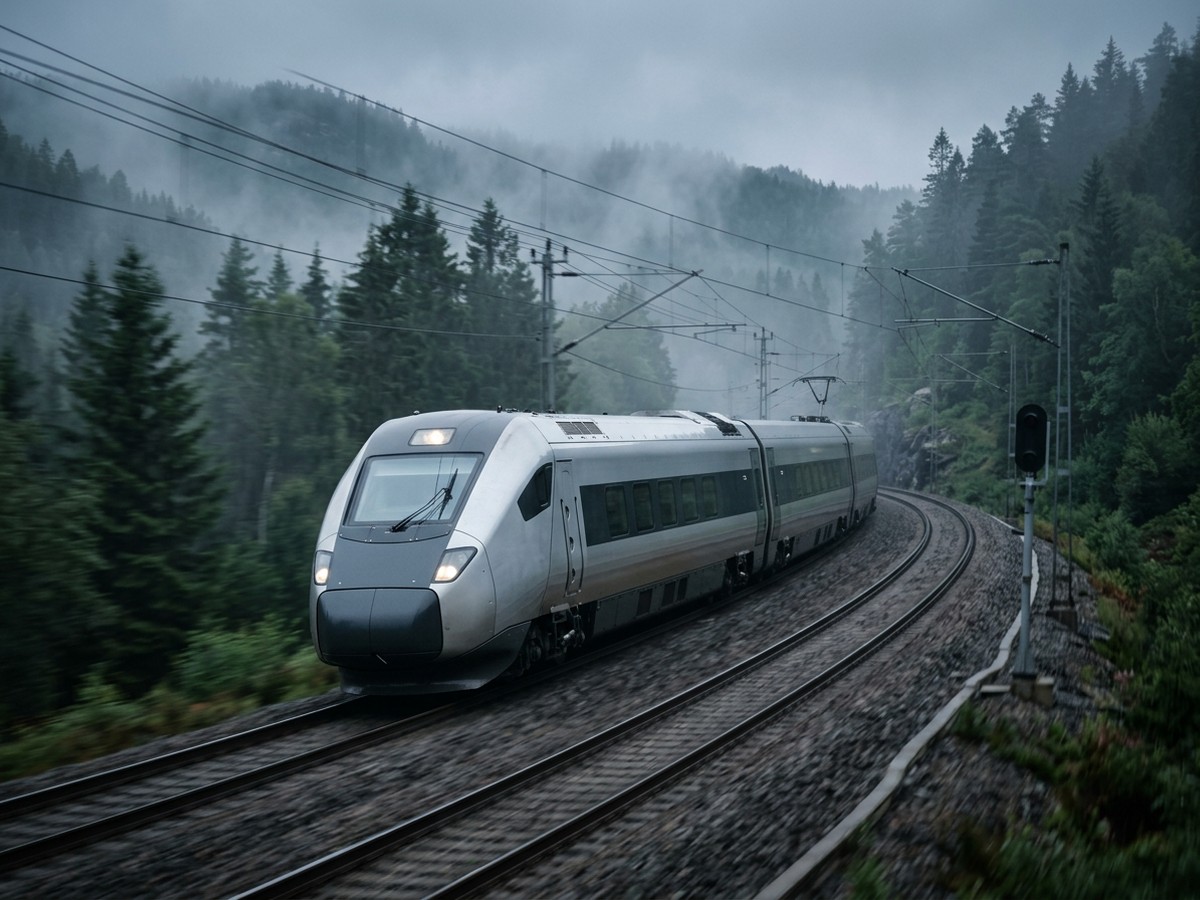
Modern Norwegian airport express train speeding through a misty landscape
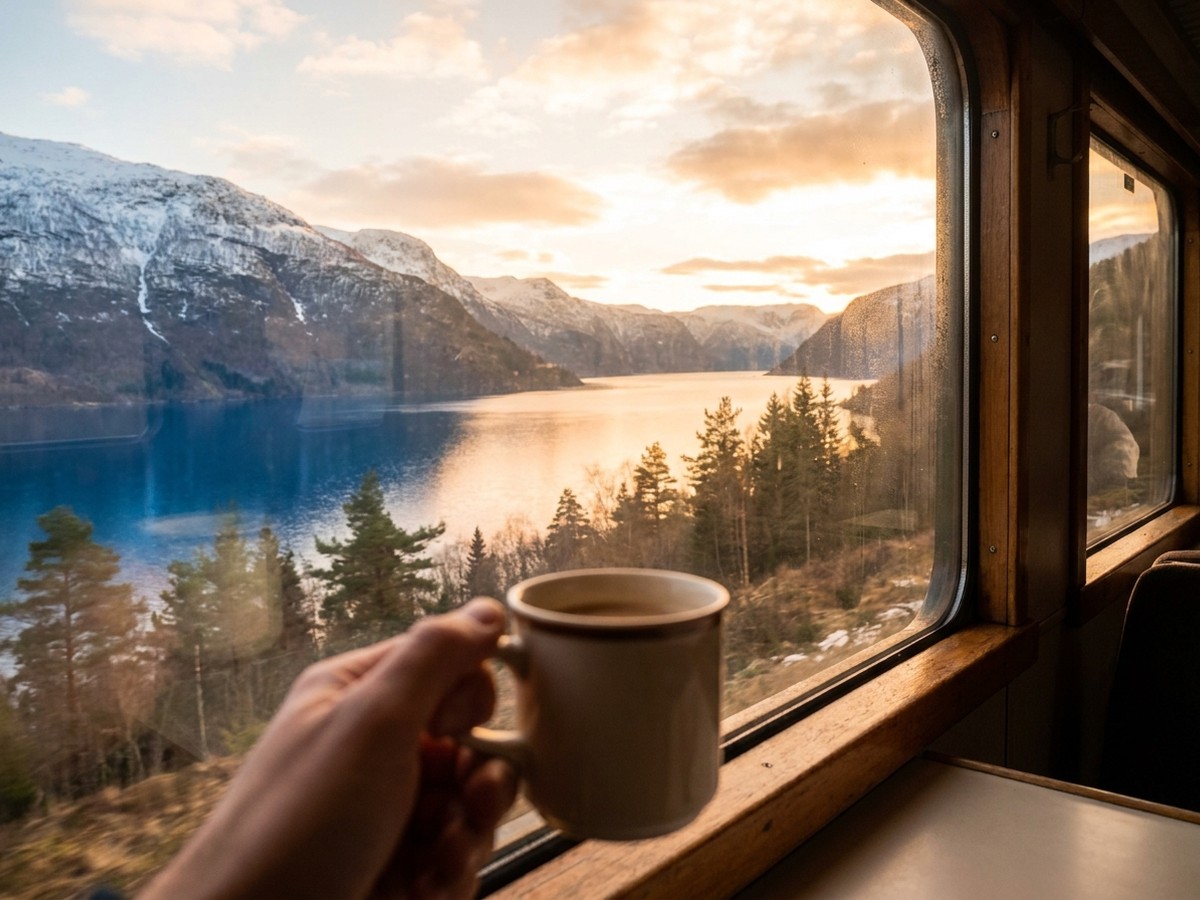
View from inside a train cabin window over a passing fjord at golden hour

Booking is easy online through each operator's own website or via Entur, Norway's official national transit planner and public transport travel planner covering every operator in one place. Advance-purchase tickets can cut prices significantly if you book train tickets a few weeks ahead, though the cheapest tickets — often low fare tickets — are usually non-refundable. An Interrail or Eurail pass — useful if you're planning multiple journeys — covers most routes too, since Norway sits inside the wider European rail network. Choose your route, then book directly: connecting buses cover the fjord villages the railway doesn't reach.

For many travellers, this is a once-in-a-lifetime adventure: a genuinely enjoyable way to see a country built on fjords and mountains, from the North Sea to the Arctic Circle. Few rail journeys anywhere in the world cover this much dramatic ground in so few hours. Whether you're travelling with friends, family, or alone, the comfort of a Komfort-class seat or a Nattog sleeper cabin turns the long stretches between stops into part of the enjoyment rather than something to endure. The fjords, the mountains and the changing light are all part of the adventure, not just scenery outside the window. Norway's rail network is smaller than many European countries', but it's internationally noted for scenic beauty rather than speed — and that trade-off is exactly the point.
Highest point on the network

Finse, the highest point on Norway's rail network at 1,222 metres above sea level, sits on the Bergensbanen.

Limited departures

Most scenic routes run a handful of times daily, not hourly — book ahead.

Wi-Fi actually works

Unlike more remote networks, Norwegian trains keep a reliable signal for most of the journey.

Not Quite High Speed Rail

Flytoget's 210 km/h is the fastest scheduled service in the country.

Bergensbanen (Bergen Line)

Crosses the Hardangervidda plateau between Oslo and Bergen in around 6.5–7 hours.

Vy

Norway's main national operator, formerly branded NSB before its 2019 rename.

Ofoten Line

The freight-heavy Ofotbanen hauls iron ore — and a handful of passenger trains — from Narvik to the Swedish border.

More lines ahead

Bane NOR is planning expansions around Oslo and other larger cities, including a proposed new line via Haukeli to Stavanger.

Open to competition

Traffic Package 1 for long-distance services began December 15, 2019, and Traffic Package 3 for Oslo–Bergen services followed on December 13, 2020.

Norway in a Nutshell Tour

The popular Norway in a Nutshell tour links the Bergensbanen, the Flåmsbana and a fjord cruise into one day trip.

Practical Tips

What to know before you book

A little planning turns a good trip into a great one — here's what matters most before you lock in your journey. Train tickets typically open for booking around 90 days in advance, and seat reservations are recommended — sometimes mandatory — on long-distance routes in peak season; buying tickets on board usually incurs a surcharge, so it's cheaper to buy tickets ahead online or at a station's ticket counters. Advance-purchase fares can cut ticket prices significantly, Wi-Fi is reliable across most of the network, and summer (May–September) is peak season for the fjords while winter is best for the Nordlandsbanen's aurora views. Book scenic routes like the Flåmsbana well ahead in summer, and check whether an Interrail or Eurail pass covers your route before buying separate tickets.

Book advance fares for the cheapest tickets

Operators' advance-purchase fares can be a fraction of the walk-up price, and are usually non refundable, but they sell out on popular routes.

Peak season is May–Sep

Fjord scenery and long daylight hours make summer the busiest window for the Bergensbanen and Flåmsbana.

Winter means aurora

The Nordlandsbanen crosses the Arctic Circle after dark for much of the winter — a real chance to see the northern lights from your seat.

Interrail & Eurail accepted

Most Norwegian operators honour an Interrail pass or a Eurail pass, unlike more isolated networks.

Entur plans every journey

Entur is Norway's official travel planner and ticket search across all operators, though some tickets still route to the operator's own site to complete purchase.

Honest limitation: infrequent departures

Scenic routes run a handful of times daily, not hourly, so build your itinerary around the timetable, not the other way round.

Reserve your seat, or go first class

Seat reservations are included with most long-distance tickets and recommended — sometimes required for rail pass holders — in peak season; a few routes also offer a Premium pluss or first class tier above Komfort.

Amenities

Onboard, across the network

The onboard experience varies by train and class, but a few amenities show up again and again across the network.

Panoramic windows

Extra-wide windows on the Bergensbanen and Flåmsbana frame the fjord and mountain scenery.

Café car dining

Hot meals and drinks available on all long-distance Vy and SJ Norge services.

Private cabins

Fold-down beds in Nattog sleeper class on overnight routes.

Reliable Wi-Fi

Consistent signal for most of the journey, even through mountain tunnels.

Power at every seat

Standard on Vy's intercity fleet, in both Standard and Komfort class.

Off-train stops

Guided stops and connecting buses at key scenic points along the Nordlandsbanen.

Quiet carriages

Designated quiet zones on Vy's Komfort class services.

Bike storage

Dedicated racks on regional services, reflecting Norway's cycling culture.

Why Trust This Guide

Built to be useful, not just a booking funnel

Independent & unbiased

We're not owned by any train operator — routes and honest limitations are covered side by side.

Trusted booking partner

Bookings are handled by High-Speed Trains, an established independent rail-ticketing service.

Secure booking

Payment and personal details are handled entirely by the operator's own secure checkout.

Practical, tested tips

Booking windows, luggage rules and Wi-Fi realities — the details that actually affect your trip.

FAQ

Norwegian trains — frequently asked questions

Still deciding between routes, classes, or dates? These are the questions travellers ask most before booking.

Book tickets ↗
What are the main train types in Norway?+

Long-distance scenic lines are the network's crown — the Bergensbanen (Oslo–Bergen), the Nordlandsbanen (Trondheim–Bodø, crossing the Arctic Circle), and the Raumabanen (Åndalsnes), run by Vy and SJ Norge. The short but dramatic Flåmsbana branch line and the high-frequency Flytoget airport express round out the network.

How long does the Oslo to Bergen train take?+

The Bergensbanen covers around 371 km in roughly 6.5 to 7 hours, crossing the Hardangervidda plateau and Finse, the highest mainline station in Northern Europe at 1,222 metres. It runs four to five times daily.

How do I book tickets for Norwegian trains?+

Entur is the official national transit planner and a good place to book train tickets across every operator; Vy, SJ Norge and Go-Ahead Nordic each complete ticket purchases through their own site for the routes they run (sometimes written GoAhead Nordic), and Flytoget has its own site and app for the airport express train. Most tickets can be bought online, or you can buy tickets at ticket counters in most major stations.

How far ahead can I book, and do I need a seat reservation?+

Tickets generally open for booking around 90 days in advance. Seat reservations are usually included with long-distance tickets and are recommended — and on some routes required, including for most rail pass holders — especially in the May–September peak season.

Can I combine routes into one trip, like Norway in a Nutshell?+

Yes — the popular Norway in a Nutshell tour links the Bergensbanen, the Flåmsbana and a fjord cruise into a single day trip between Oslo and Bergen, and it's easy to extend into a longer multi-stop itinerary. International trains also connect Oslo Central Station (Oslo S) with Stockholm, Gothenburg and Copenhagen, so a trip to explore Norway by rail can easily fold into a wider Scandinavian journey. For more travel suggestions and journey time comparisons, see the routes table above.

How often do Norwegian long-distance trains depart?+

It varies by route: the Bergensbanen runs four to five times daily, the Nordlandsbanen once or twice daily, the Flåmsbana several times a day in summer, and Flytoget every 10 to 20 minutes.

Do these trains have Wi-Fi and modern amenities?+

Yes — Wi-Fi is generally reliable across the network, even through mountain tunnels, and most long-distance trains have café cars, panoramic windows on scenic routes, and power outlets at most seats.

Can I bring luggage on Norwegian trains?+

Yes — long-distance services have overhead racks and dedicated luggage areas, with no strict limits for standard intercity travel.

Is there an overnight sleeper train in Norway?+

Yes — Nattog night trains on the Oslo–Bodø and Oslo–Trondheim routes offer private sleeper cabins for overnight travel.

Are there long-distance trains that cross regional borders?+

Several routes do: the Bergensbanen (Oslo–Vestland), the Nordlandsbanen (Trøndelag–Nordland), and the Sørlandsbanen (Oslo–Rogaland via Agder).

Scenic road along a Norwegian fjord

Ready to cross Norway by rail?

Compare routes, classes and dates, then book securely through our trusted partner.

Book Tickets ↗